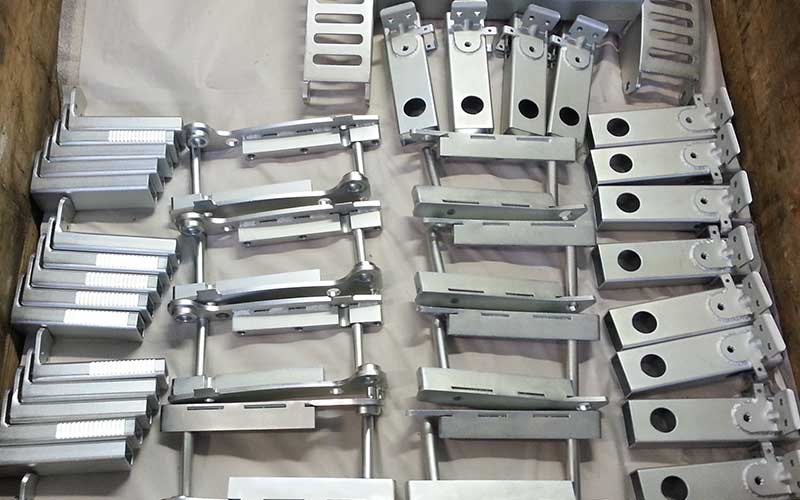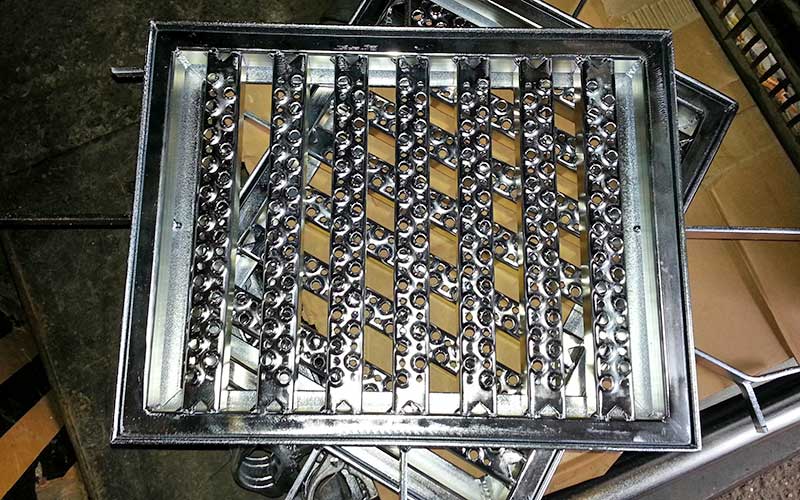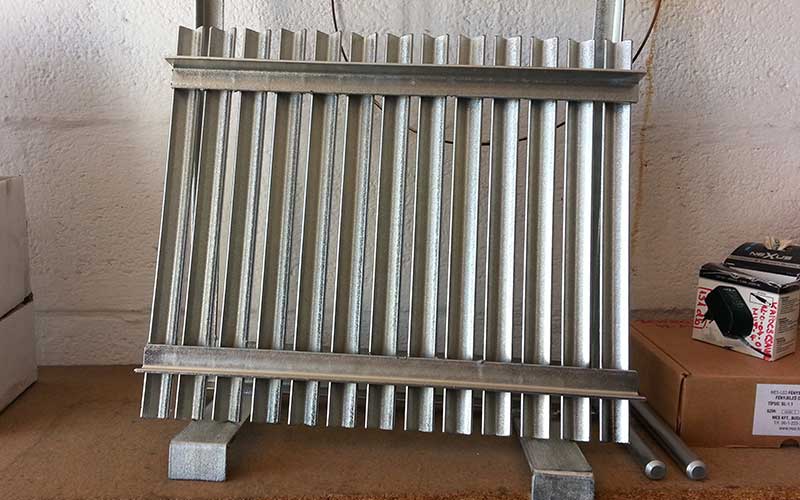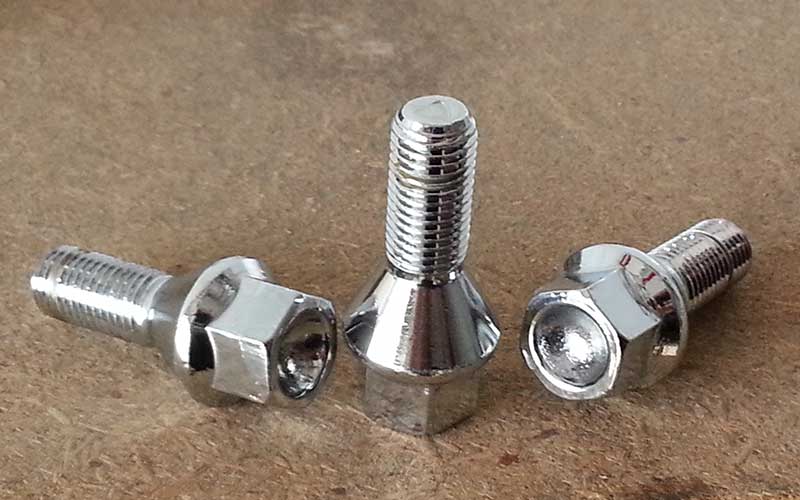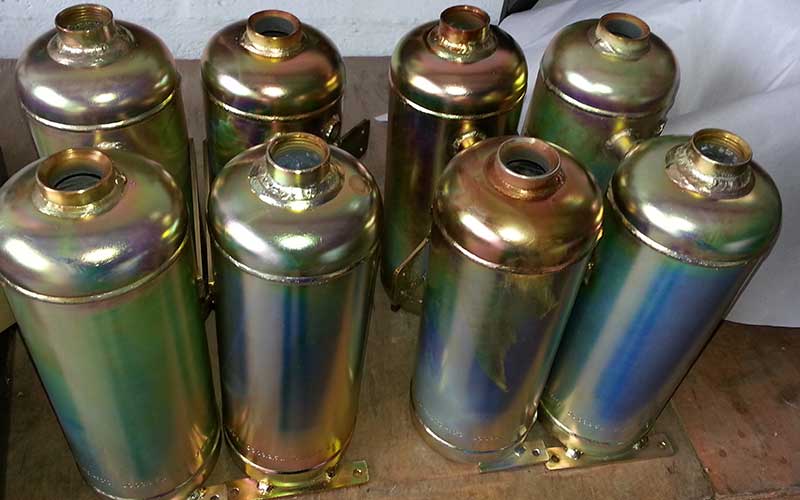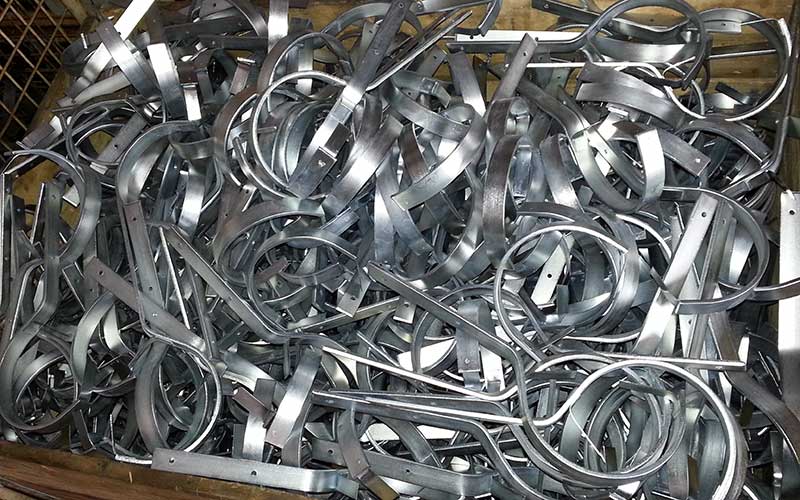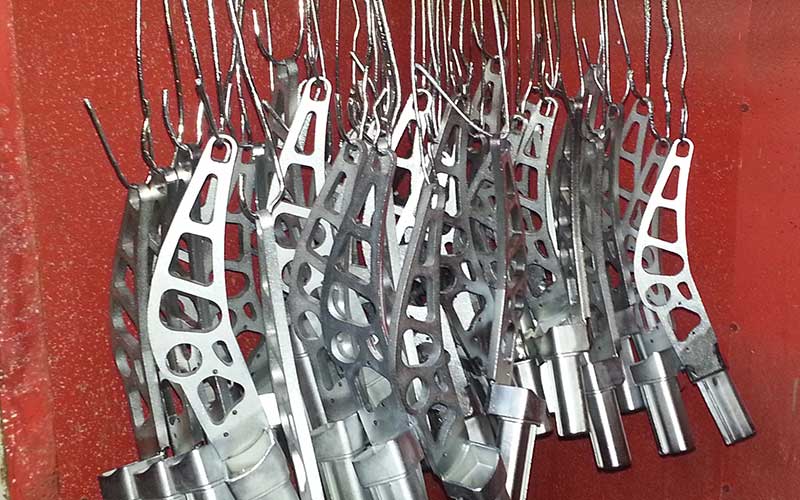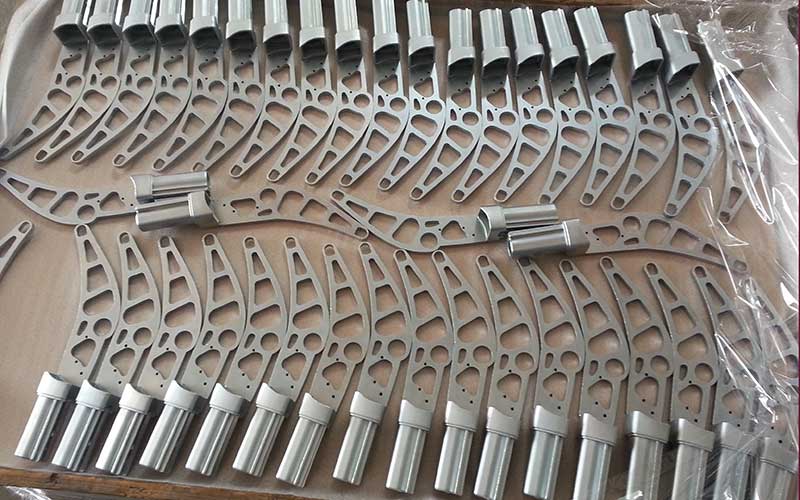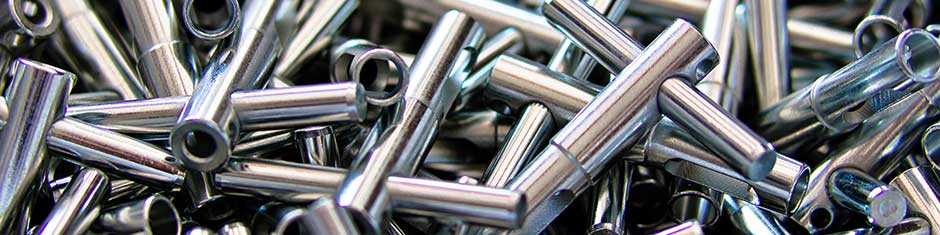
Zinc-coating (zinc-coating of mass products)
Zinc-coating is generally used for the surface protection of steel products exposed to the effects of rural and urban environments, as well as industrial environments with low sulphur dioxide content.
Zinc is one of the most frequently used metal coating materials for the protection of iron and steel products against corrosion.
This is due to that:
- • zinc is one of the cheapest metals that can be used for electroplating,
- • zinc is less fine metal than steel and so it is able to protect steel from corrosion as long as the integrity of the coating is given,
- • its decorative value and protection effect can be modified in a wide range depending on the processes of deposition and after-treatment, and
- • its toxic effect is moderate.
Zinc-coatings are usually not suitable for decoration purposes, since the salt compounds created under the influence of atmosphere cover the metal colour and gloss of the surface completely. Zinc resists very weakly acids and alkalis, or it is not able to resist them at all.
Zinc-coating in acidic electrolytes
- • The coating deposited from low-acid electrolytes with ammonium ion content has excellent covering capacity, levelling effect and high gloss. Its disadvantage that the ammonium ion content of the electrolyte causes difficulties in sewage treatment when heavy metals are separated.
- • High-acid electrolytes can have small or medium zinc content. The latter makes it possible to carry out the electroplating process with higher electric current density. Electrolytes with chloride or sulphate content can also be used. Chloride electrolytes have the advantage that higher electric current density can be achieved due to its higher conductivity, but they also have the disadvantage that they have more aggressive corrosive effect on the electroplating equipment.
Zinc-coated products